Solutions

Sprint

Team

Insights

Mapping cost, control and resilience across the fuel supply chain

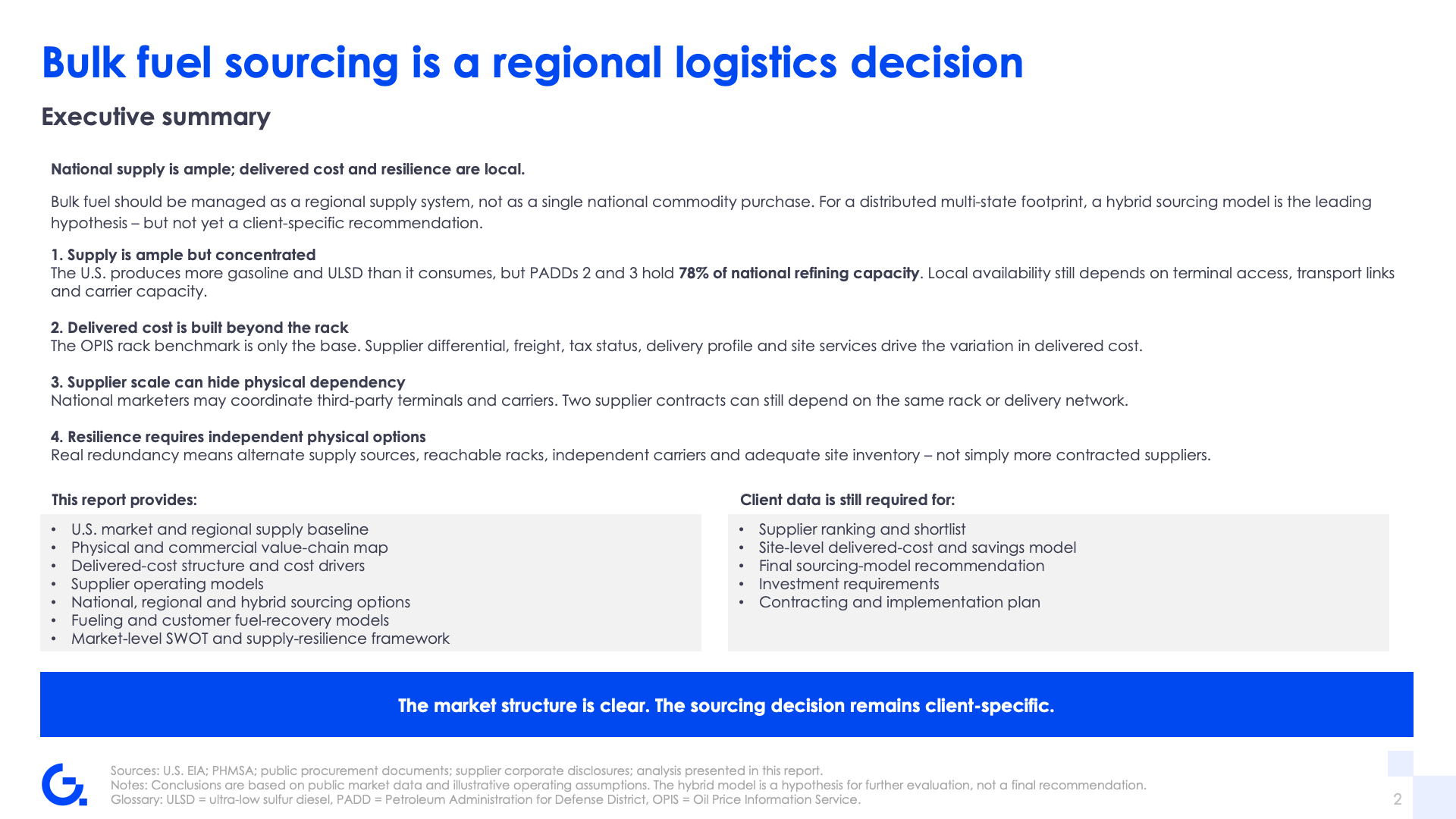
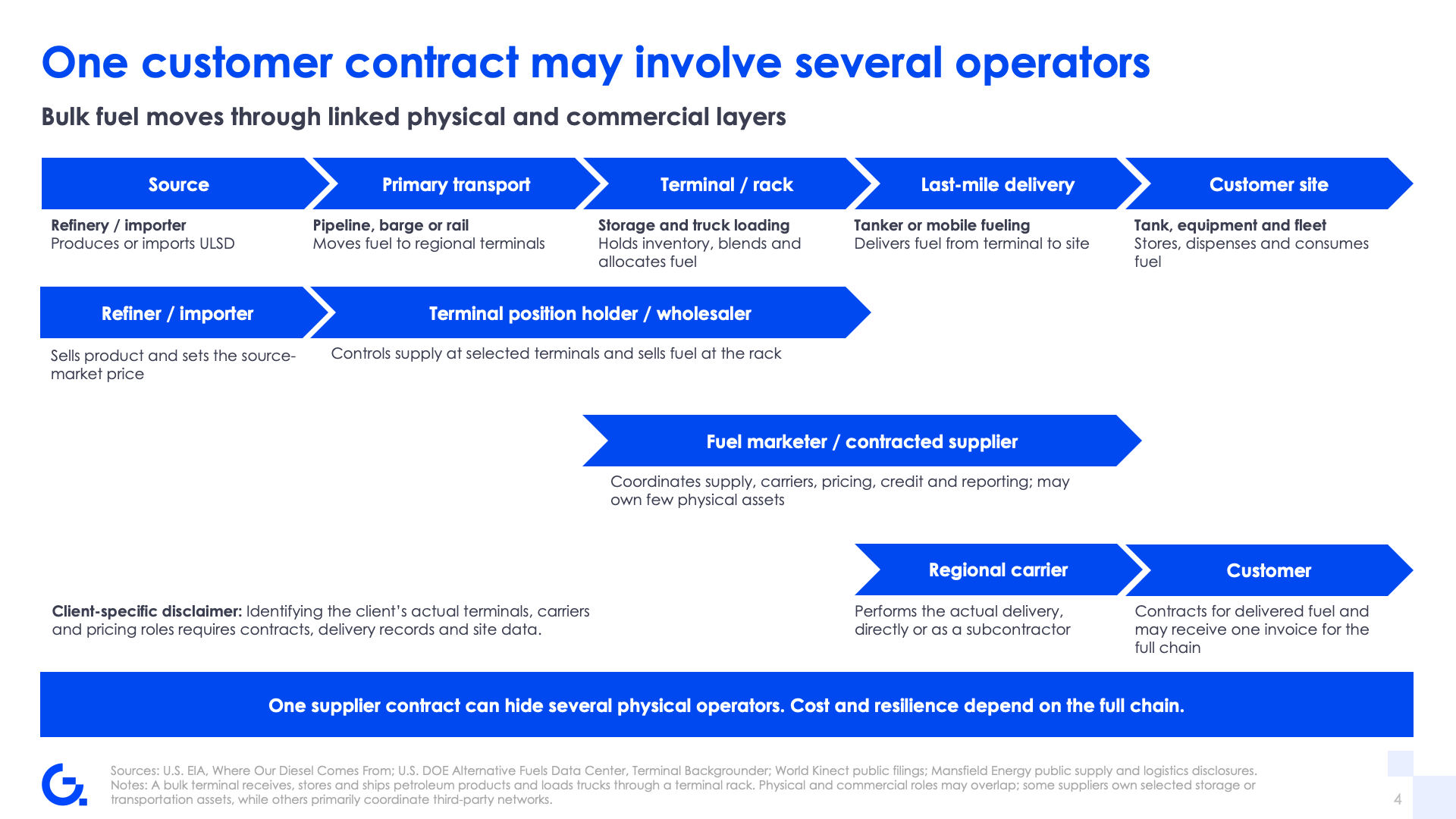
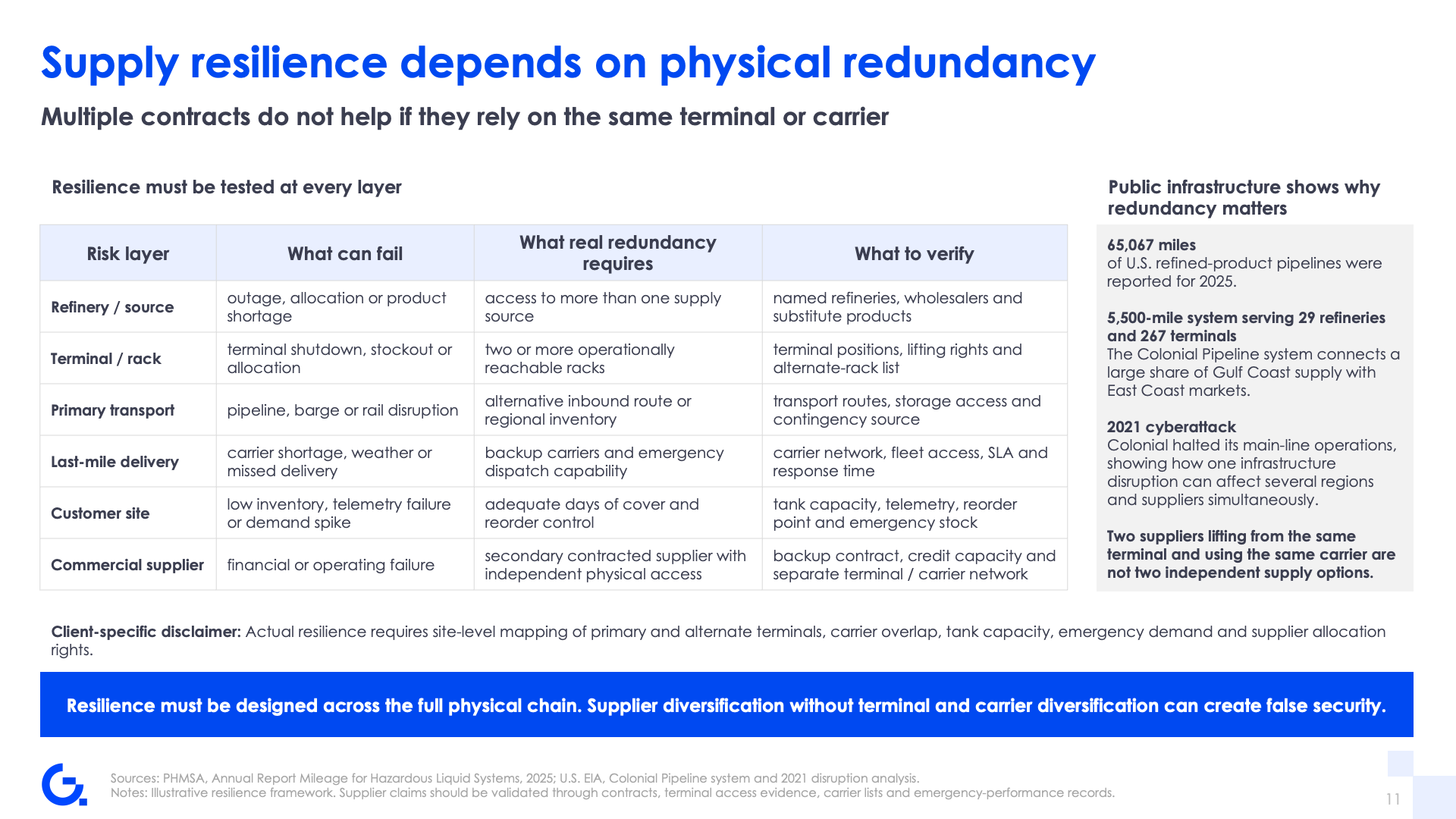
Two suppliers, one point of failure

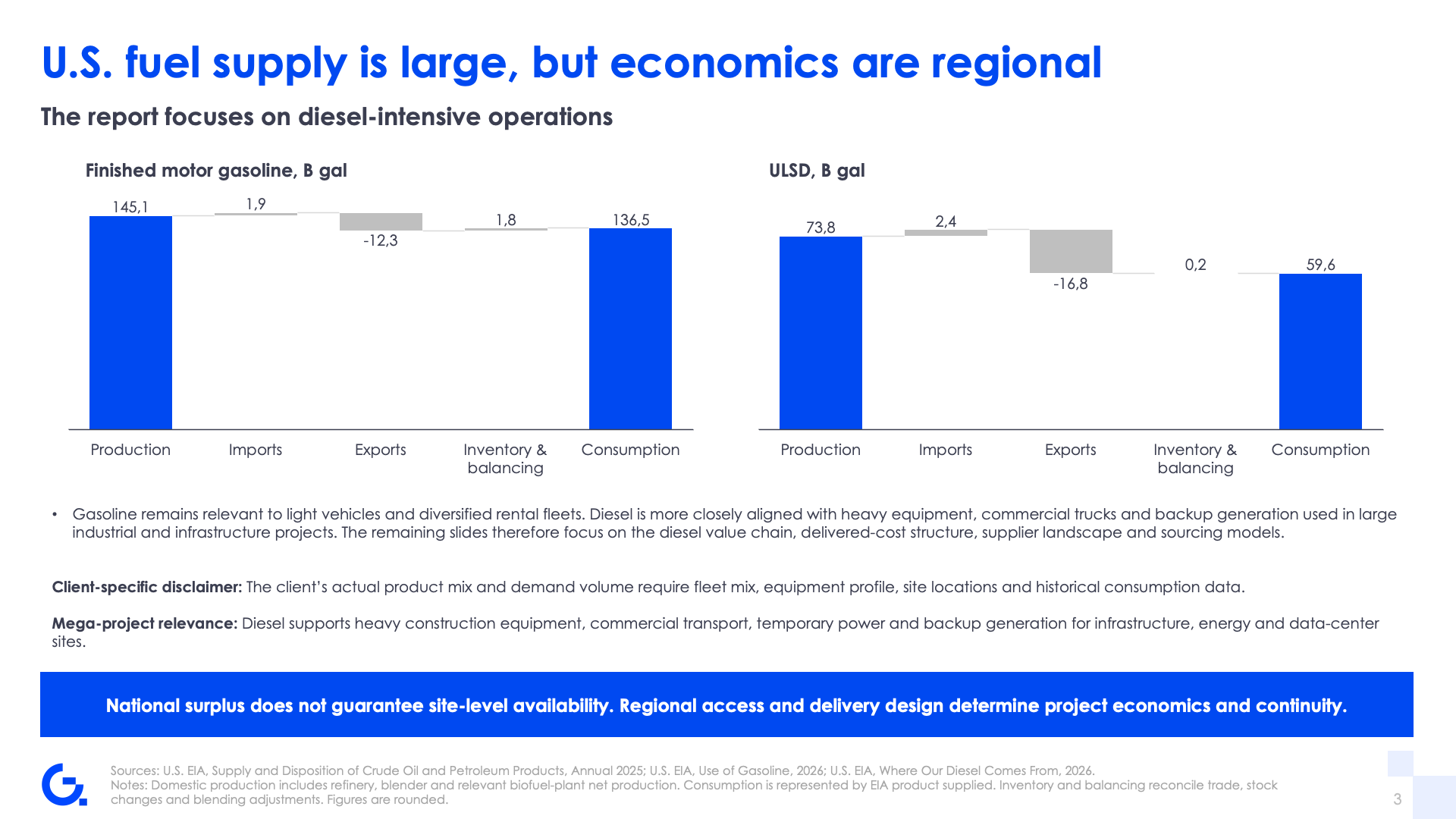
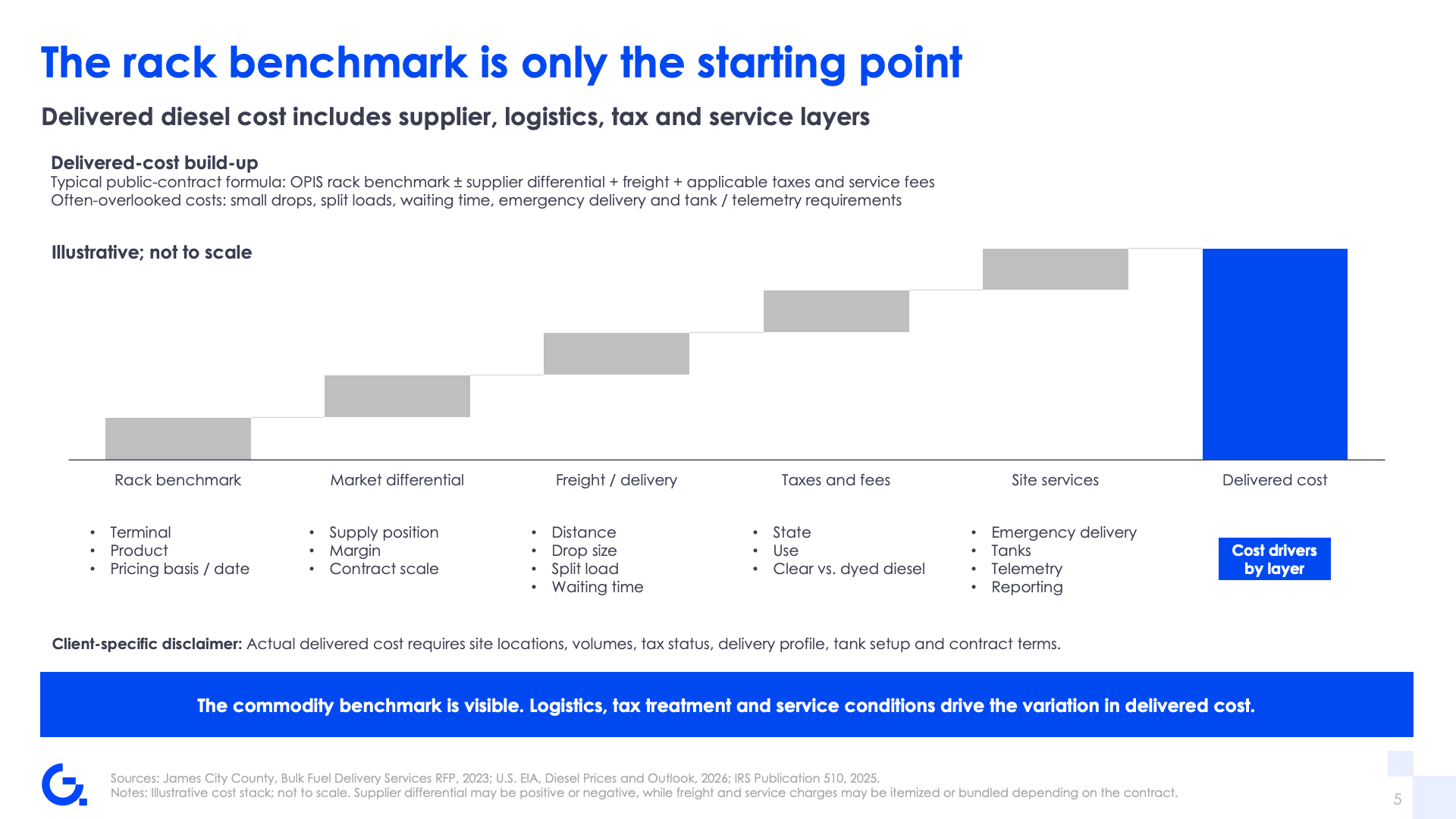
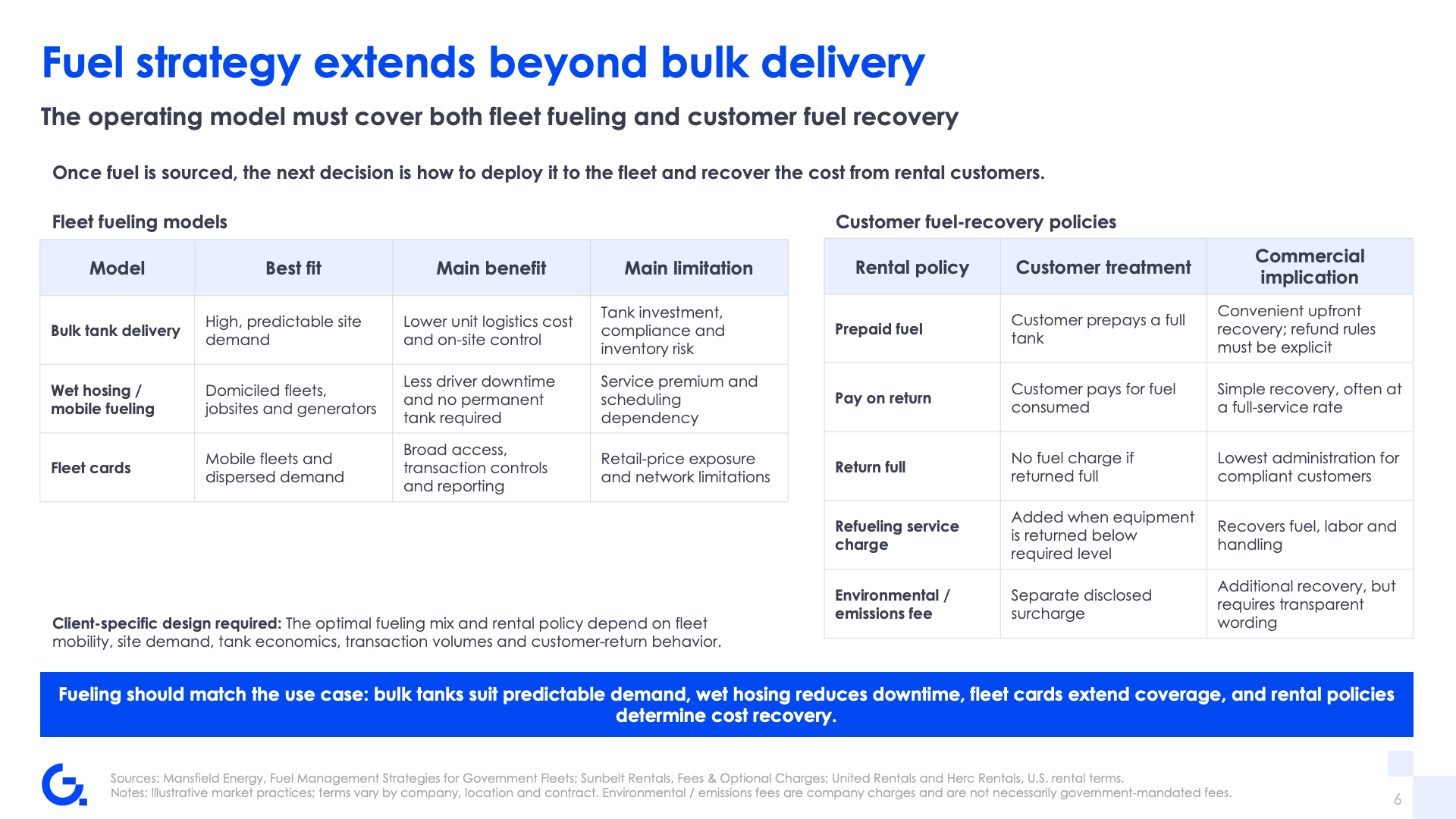
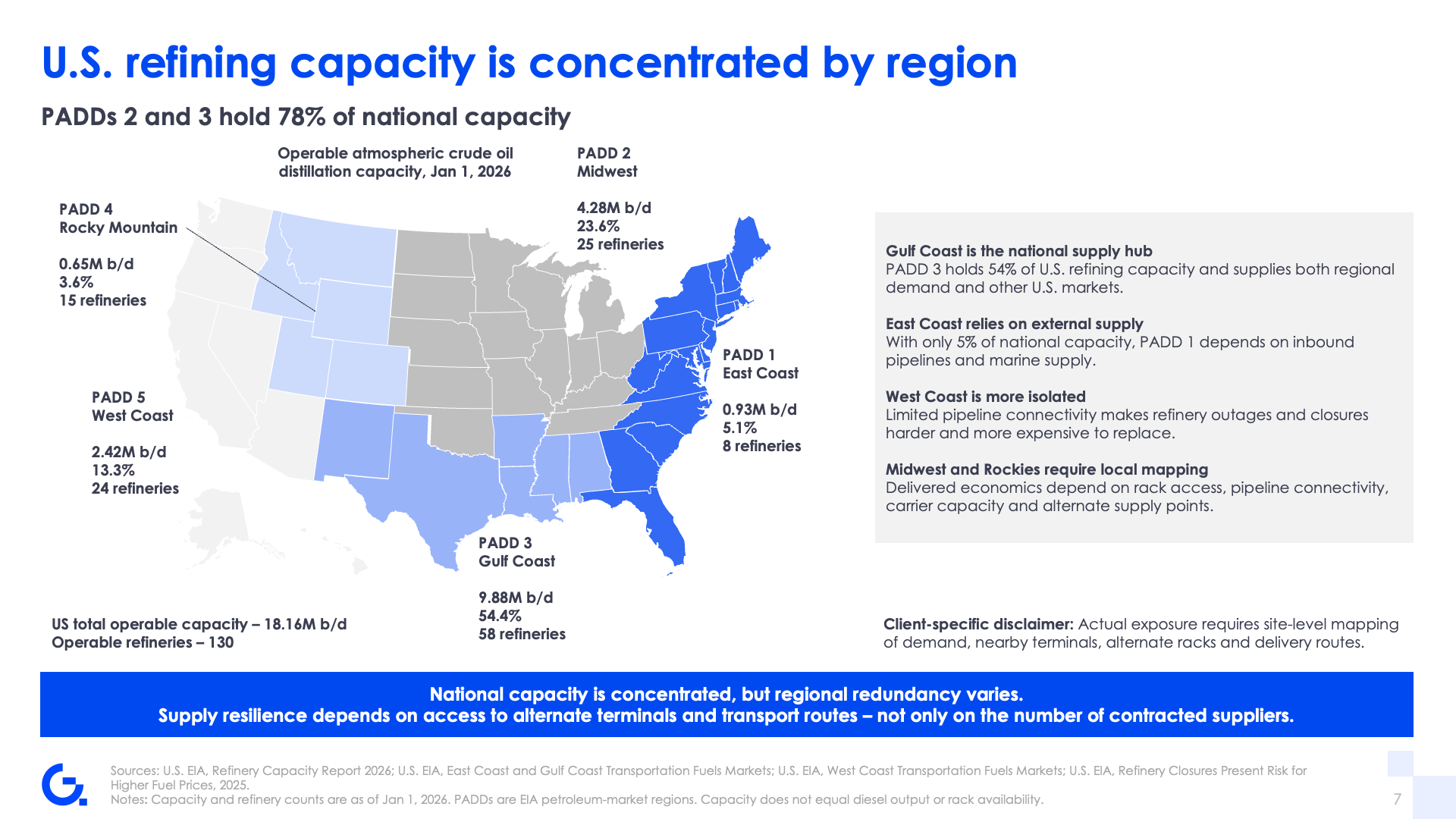
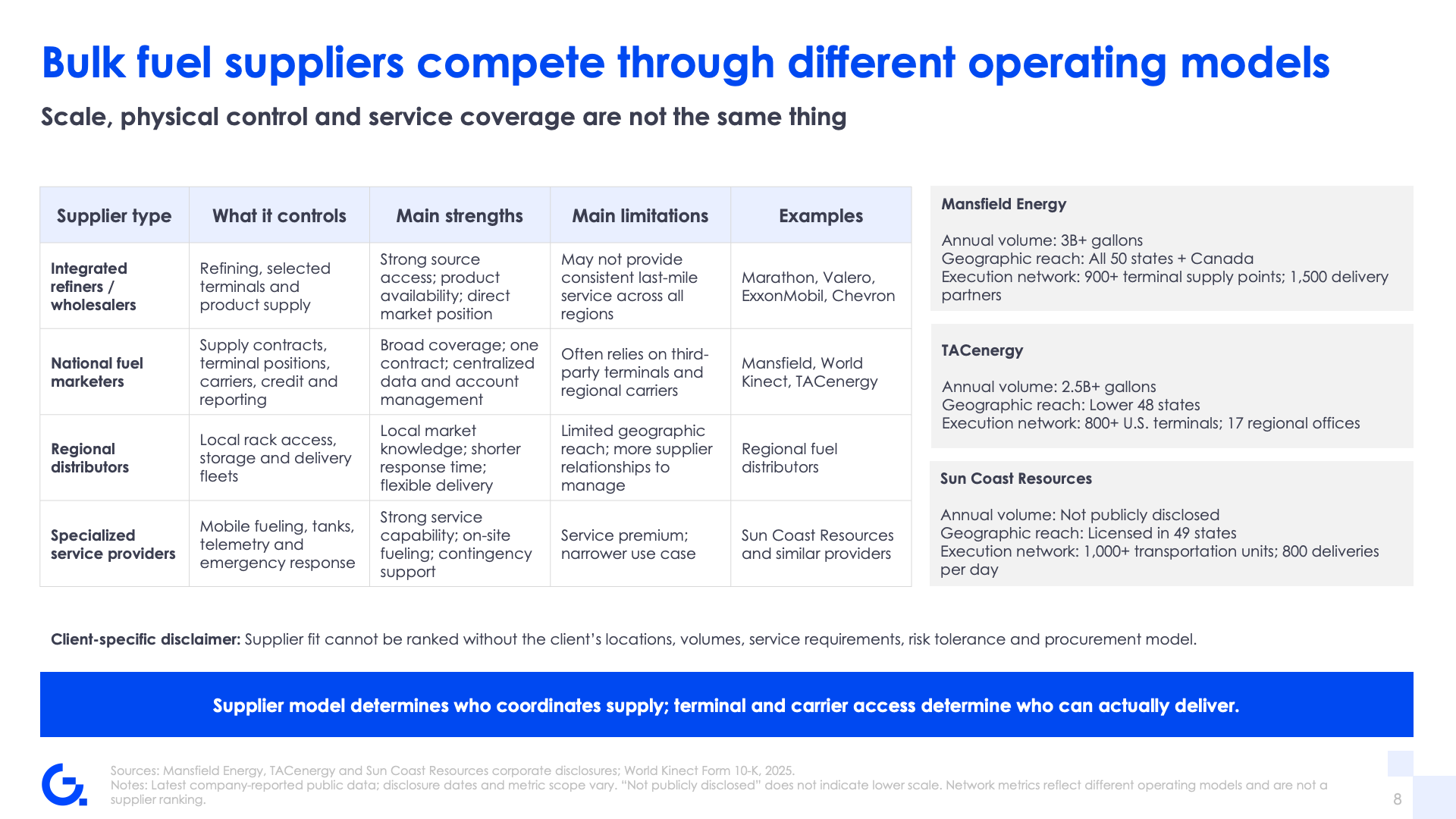
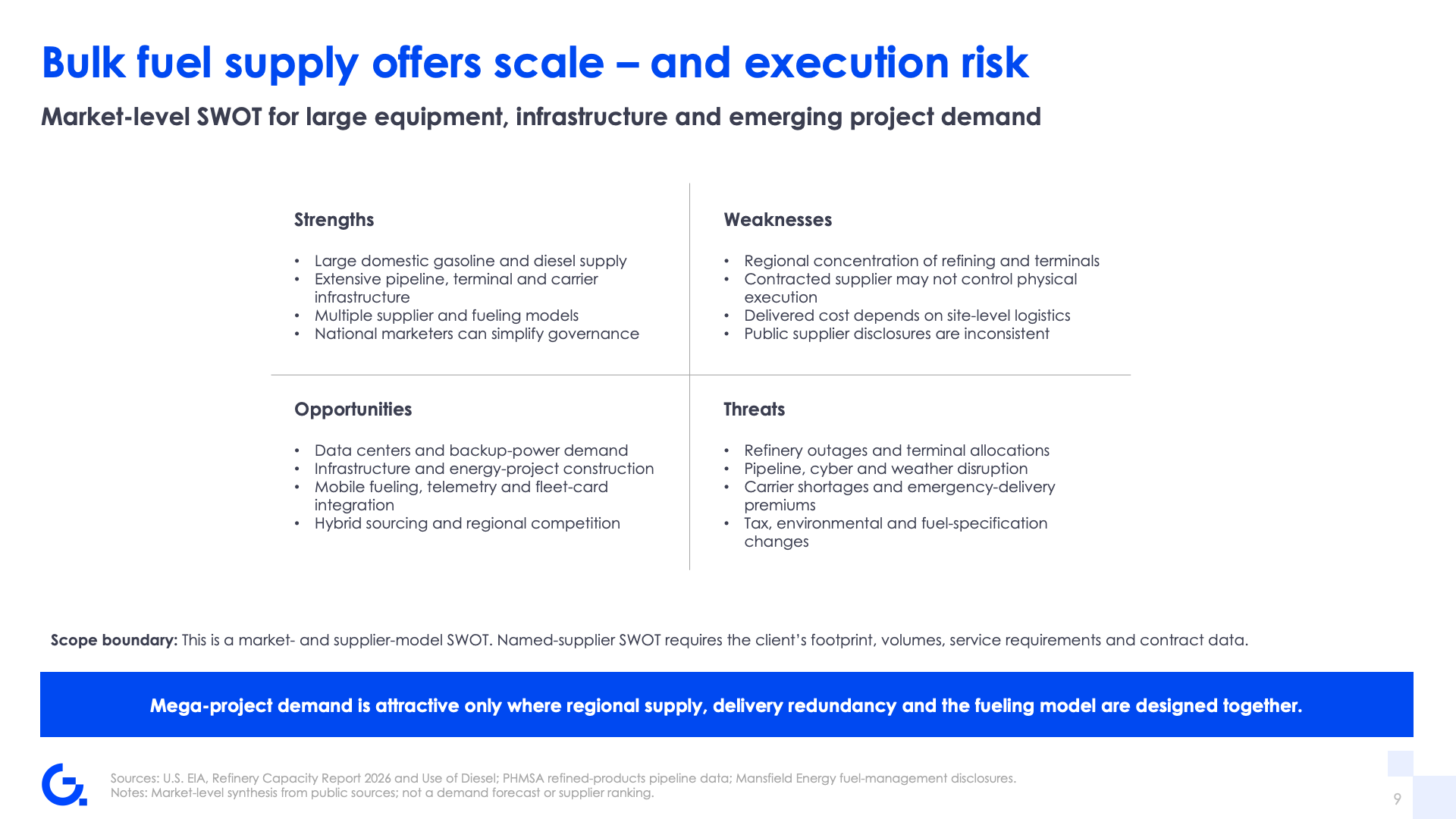
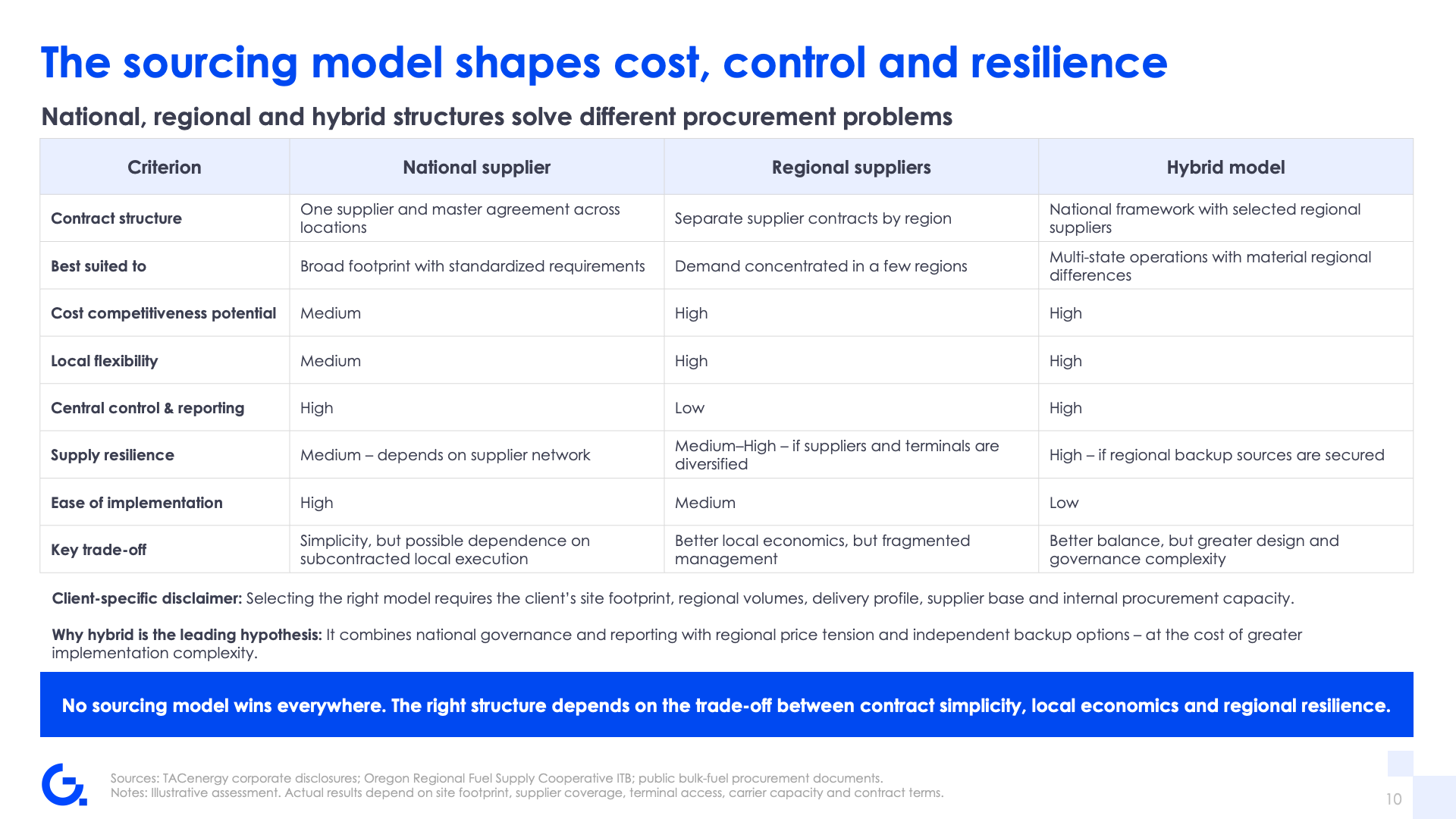
Using public data, we mapped the U.S. fuel balance, refinery concentration, terminal and carrier dependencies, delivered-cost build-up, supplier operating models and customer fuel-recovery practices. National supply is ample, but site-level economics and continuity remain regional: two nominally separate suppliers may still depend on the same terminal, carrier or pipeline. We compared national, regional and hybrid sourcing structures and identified hybrid sourcing as the leading hypothesis for a distributed footprint, subject to client data.
Mapping cost, control and resilience across the fuel supply chain case study

This is what one sprint produces

Every case here started as a five-day engagement or a focused diagnostic. If you're facing a comparable decision, tell us the question and we'll scope the fastest way to an answer.